
ANZAC Day 2026 – Les’ Story

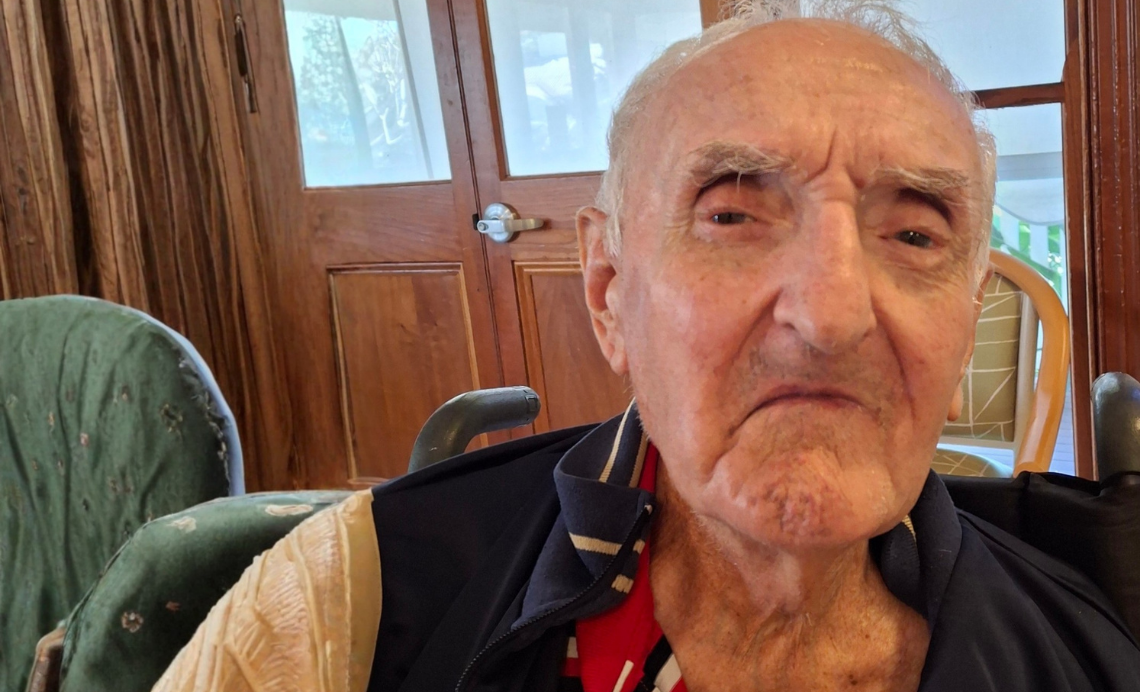
Les was born in 1937 in Budapest, right before World War II. Life was extremely hard, his family survived the war, but it didn’t get easier when the war ended. Hungary was a communist country, and things were still very uncertain.
He was raised by a caring Catholic mum and dad. From a young age he knew about God. That faith would become incredibly real to him later in life.
As a teenager, things became dangerous. Les was known to authorities, and he realised he couldn’t stay. He had to get out—escape to the West. That meant crossing the Iron Curtain, which was heavily guarded with electrified wire, barbed fences, and watchtowers filled with armed soldiers.
In 1954, at just 17 years old, Les made the decision to go alone.
One evening Les observed that the soldiers were drunk and playing cards, so he knew that it was his opportunity. Looking back, he says it was both luck and God’s protection that got him through.
He describes crawling and running through the snow in freezing conditions, timing his movements between flares that lit up the night sky. Sharp shooters were in watch towers along with soldiers using machine guns, bullets were flying overhead. At one point, he had to bury himself in the snow to avoid being seen. Even though it was freezing, he said he was sweating from fear, and the heat from his body started melting the snow around him.
Once he made it across, he kept crawling through a field until he saw a light in the distance. It turned out to be a horse barn. Inside, a man greeted him with, “Good evening my friend, you are welcome here”. There were already 20 or 30 others there who had escaped that same night. They shared what they had—bread, lard, and a cup of tea. Basic food, but after what he’d been through, it meant everything.
Les was told to report to the Austrian police. He was known to them. Les was asked if he was carrying any weapons, his reply was to lift up his shirt which exposed hand grenades, and the police ran. They returned also to find a hand pistol and bullets. Fortunately, these were not needed during his escape, but he would have used them if necessary. Les registered his details and received documentation that allowed him to travel freely. He made it to a Red Cross refugee centre, where he stayed for three months. He and 6 other young men applied to different countries, but were knocked back — America, France, Sweden. Les asked about New Zealand, where he had family, and things finally started to move.
Through the help of the permanent representative of New Zealand to the United Nations, Sir Leslie Munro, everything changed. Les was told to be ready the next morning. A taxi picked him up and took him to the airport in Salzburg.
He still remembers what it felt like to be strapped into a plane—something completely new and amazing. His journey to a new life took him across the world: Salzburg, Istanbul, Tehran, Baghdad, Bombay, New Delhi, Singapore, Brisbane, and finally Auckland.
He arrived in New Zealand in 1955,18 years old, not speaking English except for “thank you”.
Family took him in, helped him get work on the railways, and he slowly built a life. He worked hard, saved, bought a car, got married, had children, and became successful in business.
Les often says to his children: “Learn all you can—no one can take that away from you.”
Regularly Les talks about his faith.
He’s very straightforward about it. He’ll often ask people, “Do you believe in God?”—and he’ll say, “It’s a yes or no answer.” For him, there’s no question.
He says, “If I didn’t have God, I wouldn’t have made it. I felt Him with me. I had power with me.”
So how does this connect to Anzac Day?
Anzac Day is about remembering courage, sacrifice, and the cost of freedom. While Les wasn’t a soldier, his story carries those same themes. He risked his life for freedom. He faced fear most of us can’t imagine. And he kept going.
His story is a reminder that war doesn’t just affect those on the battlefield — it shapes lives in all kinds of ways.
This Anzac Day, as we remember those who served, we also take a moment to reflect on stories like Les’. Stories of bravery, resilience, and faith. And maybe, like Les, we hold onto what really matters—faith, hope, and the freedom we sometimes take for granted.
Lest we forget.
Liked this article?
Here’s some more you may be interested in
Hope Needs a Home: A Story of Stability and Support
How the cross changes everything
The Impact of Community