
Mary's story of love, resilience and care


Mary's story of love, resilience and care
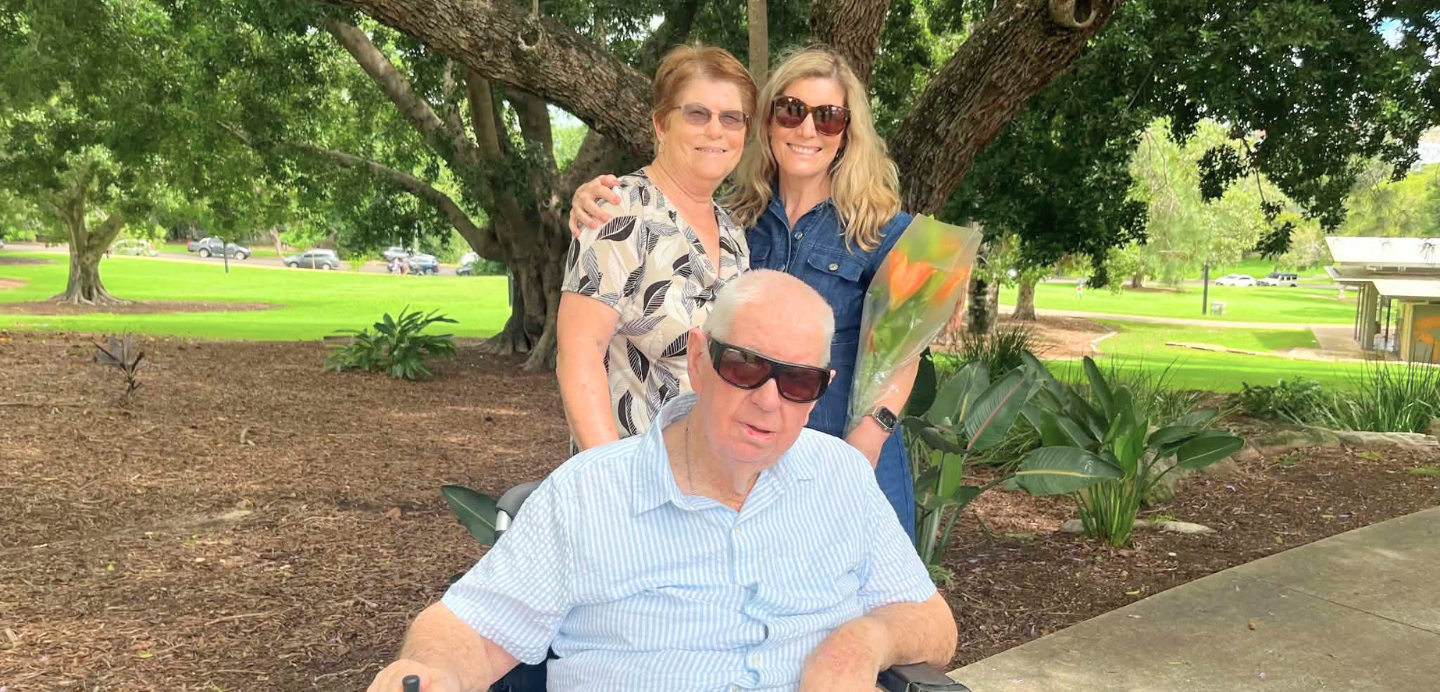
When Mary looks back on her journey with her husband Peter, she remembers both the challenges and the privilege of walking alongside him through more than a decade of living with dementia.
Today, as a Churches of Christ Home Care client herself, Mary hopes sharing her story will help others understand the realities of dementia, the importance of support, and why no one should face the journey alone.
Peter was diagnosed with both Lewy body dementia and frontotemporal dementia, a combination that brought complex symptoms and challenges for them both.
“It was quite challenging,” Mary recalls. “Peter had the double whammy of probably two of the worst dementia types you can get.”
Although Peter’s formal diagnosis came later, Mary noticed changes years beforehand.
“It lasted about 12 years altogether. Only about five or six years after diagnosis, but it was very obvious for four years before that that there was something wrong.”
Finding information, particularly about Lewy body dementia, was not always easy.
“It was really difficult to get a lot of good information, because it’s not a common dementia. Most people who know about dementia know about Alzheimer’s.”
Despite the difficulties, Mary says caring for Peter remained one of the greatest privileges of her life.
“It’s a huge privilege to care for someone when they’re in a time of need.”
Living with a changing reality
One of the most challenging aspects of Peter’s condition was the hallucinations and delusions associated with Lewy body dementia.
“He had five wives,” Mary says with a laugh. “He liked me, but I was the wrong one most of the time.”
Peter also believed he owned several identical houses and often became distressed because he thought they were living in the wrong one.
“He continually wanted to be taken home to the right house. He didn’t know what I’d done with the good one.”
For Peter, these beliefs felt completely real. For Mary, it meant finding ways to reassure him while keeping him calm and safe.
“It was hard looking after him, but I can’t imagine what it was like living in his mind.”
The frontotemporal dementia brought different challenges. Peter, once a confident leader, experienced significant personality changes and found it difficult to lose his independence.
“He was always the leader of everything, and it was extremely difficult for him to be told what to do,” Mary says.
Creativity, compassion and learning
Over the years, Mary learned there was no handbook for every situation. Sometimes the best solutions came from thinking differently.
When Peter believed his wife was missing, he would become distressed and frightened.
“He would sit crying because he’d lost his wife.”
Then Mary noticed something. Peter often described his wife as wearing a red shirt.
One day, Mary put on the only red shirt she owned, walked into the room and introduced herself as though she had just arrived.
“I said, ‘Peter, it’s Mary. They tell me you think I’m lost, but I’m here.’”
The response was immediate.
“He was so happy. He said, ‘Are you back? You’ve come back? I was so frightened.’”
It became a strategy Mary used many times.
“You really have to be creative in the way you deal with people,” she says.
“Learn as much as you possibly can about what you’re dealing with, because knowledge is power.”
The hidden reality of caring
Mary says the physical and emotional demands of caring are often unseen.
“It’s extremely tiring because people with dementia have very poor sleep. You never get more than probably three hours’ sleep in one go.”
As dementia progresses, she says, caring can become a 24-hour responsibility.
“You don’t get a break.”
One of the most important lessons Mary learned was the need to care for herself too.
“Sometimes, particularly in the beginning, I used to feel selfish looking after myself.
“But I realised that I had to look after myself or I would fall apart.”
Her advice to other carers is simple but powerful: “If you don’t look after yourself, you can’t look after the person you’re caring for.”
The value of support
As Peter’s condition progressed, consistency became essential. Having familiar support workers made a significant difference to both Peter’s wellbeing and Mary’s peace of mind.
“Peter didn’t take to new people very well. We got the same people week after week, and that was really important.”
Mary believes dementia support should always be tailored to the individual.
“It really has to meet the needs of the individual person. It can’t just be a blanket approach.”
While Churches of Christ helped care for Peter, Mary says the support extended to her as well.
“I felt very cared for by Churches of Christ. They cared for Peter, but they cared for me as much as they cared for Peter, in a different way.”
Sometimes, she says, it wasn’t practical help that mattered most. It was simply knowing someone cared enough to ask.
“When he was having a really bad day, they would always say to me, ‘Are you okay? Do you need extra help? Is there anything we can do?’”
“Some days they couldn’t do anything to help me, but just the fact that they asked made all the difference.”
For Dementia Action Week, Mary hopes people will seek support early, stay connected and remember they do not have to face dementia alone.
“Get as much support as you can,” she says.
“It helps to talk with other people when you’ve got a problem, because someone else might have experienced that problem as well and found a solution.”
Most importantly, she wants carers to know there is strength in asking for help.
“You can feel very alone. You’re home a lot of the time, and you lose contact with a lot of people.
“It’s really important to stay in touch with people and to never lose your sense of humour.”
As Mary reflects on her years caring for Peter, it is clear that while dementia changed many things, it never diminished her love for him.
Her story is a reminder that behind every dementia diagnosis is a person, a family, and a community that can make a meaningful difference through understanding, compassion and support.
Dementia is a shift in the way people experience the world around them. The diagnosis does not define who the person is.
Liked this article?
Here’s some more you may be interested in
One Year On: Jess and Danna-Lee on the Beryl Wiltshire Scholarship

Leaders of Excellence: Katherine Maskell
Bribie Island’s answer to David Jones | National Volunteer Week